Spokane Valley, Washington
Forestry Mulching in Spokane Valley, WA
From greenbelt edges to overgrown residential lots, Spokane Valley properties need fast fuel reduction and cleaner access. Mulching delivers a tidy, defensible finish without burn piles.
Forestry Mulching in Spokane Valley, Washington
Gow Forestry provides professional forestry mulching services in Spokane Valley, Washington. With a population of roughly 108,000 and annual growth of 0.56%, Spokane Valley is the fastest-growing wildland-urban interface area in the Inland Northwest. The valley floor sits between 2,000 and 2,150 feet of elevation on what was historically open ponderosa pine and bunchgrass parkland, now heavily developed with residential neighborhoods pushing directly into fire-prone vegetation. According to ClimateCheck, 78% of Spokane Valley buildings face significant wildfire risk, and residents here are 61% more at-risk than the average Washington community.
Spokane Valley Terrain & Wildfire Risk
Spokane Valley occupies the flattest terrain in the greater Spokane region, spreading across the valley floor at roughly 2,000–2,150 feet of elevation. The landscape was historically a ponderosa pine and bunchgrass parkland maintained by regular, low-intensity fires. Decades of fire suppression have allowed dense brush and understory growth to fill the gaps between mature trees, creating continuous fuel beds that connect residential properties to wildland vegetation.
The Spokane Valley Fire Department has surveyed over 750 homes in high-risk WUI areas, identifying defensible space gaps and fuel load concerns across many neighborhoods. Because the city grew rapidly outward into former grassland and light forest, many homes were built without adequate vegetation management plans. This pattern makes Spokane Valley the most densely developed WUI corridor in the region.
The flat terrain does offer one advantage for mulching operations: machine access is straightforward on most lots, allowing efficient single-pass coverage without the slope navigation required in hillier service areas. This makes Spokane Valley projects faster to complete and more predictable in scope. Learn more about fire risk factors in our guide to wildfire threats beyond the brush line.
Common Forestry Mulching Projects in Spokane Valley
- WUI neighborhood fuel reduction — Clearing overgrown understory on residential lots where homes sit directly against ponderosa pine and bunchgrass fuel beds.
- Defensible space upgrades — Creating Zone 0–2 compliant defensible space buffers around homes identified during the Fire Department's 750-home WUI survey.
- Vacant lot and infill cleanup — Mulching brush-choked parcels in developing areas before new construction begins.
- Property boundary fuel breaks — Establishing cleared buffers along fence lines to interrupt fire spread paths between adjacent parcels.
- Parkland-to-residential transition zones — Managing vegetation where maintained lawns abruptly meet unmaintained grassland and pine stands.
- Access road and driveway widening — Clearing encroaching brush from driveways and neighborhood access roads to ensure fire apparatus can reach homes.
Why Spokane Valley Property Owners Choose Mulching Over Traditional Clearing
Spokane Valley's dense residential development means burn piles are not a practical option for most properties. Seasonal burn bans in Spokane County restrict open burning during the exact months when fuel reduction work is most urgent. Hauling brush off-site requires truck staging on lots that often have limited access, and adds significant cost to projects that would otherwise be straightforward.
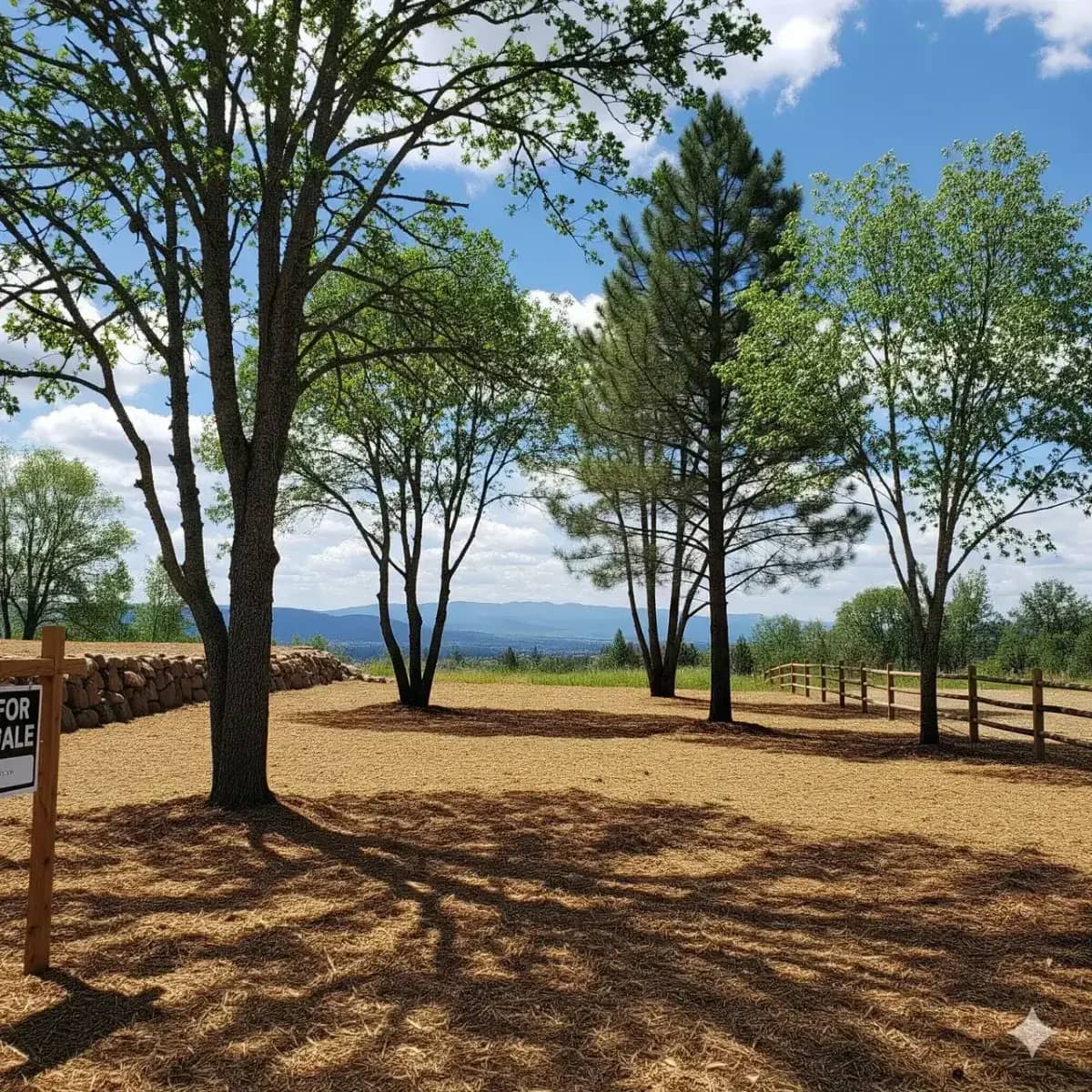
Forestry mulching processes vegetation where it stands, converting brush and small-diameter trees into a ground-level mulch layer in a single pass. On Spokane Valley's flat terrain, this means rapid coverage with minimal disruption to neighboring properties. The mulch layer suppresses regrowth and protects topsoil, eliminating the erosion problems that follow traditional scraping or grubbing on the valley's sandy loam soils.
DNR Cost-Share Eligibility in Spokane County
Spokane Valley property owners in Spokane County may qualify for up to 50% reimbursement on eligible forest health treatments through the Washington Department of Natural Resources cost-share program. The DNR Northeast Region administers applications for this area, and eligible treatments include non-commercial thinning, forestry mulching, slash disposal, and defensible space creation.
Use our DNR cost-share calculator to estimate your potential reimbursement, or contact the DNR Northeast Region directly at ne_loa@dnr.wa.gov for program details. Kevin Gow assists landowners with the full application process from eligibility review through final reimbursement.
Explore Our Services
Learn more about our wildfire mitigation and land management services across the Inland Northwest.
Spokane Valley Forestry Mulching FAQ
How much of Spokane Valley is at wildfire risk?+
According to ClimateCheck data, 78% of buildings in Spokane Valley face significant wildfire risk. Residents are 61% more at-risk than the average Washington community due to dense WUI development on former ponderosa pine and bunchgrass parkland.
Do you work on flat valley-floor lots in Spokane Valley?+
Yes. Spokane Valley's flat terrain at 2,000–2,150 feet elevation allows efficient single-pass mulching coverage. Machine access is straightforward on most lots, making projects faster and more predictable than hillside work.
Is burning an option for brush removal in Spokane Valley?+
Generally no. Spokane County enforces seasonal burn bans during peak fire risk months, and Spokane Valley's dense residential layout makes open burning impractical. Mulching processes vegetation in place without smoke or burn permits.
Will mulching help with defensible space in Spokane Valley?+
Yes. It reduces ladder fuels and creates safer spacing for Zone 0–2 defensible space upgrades. The Spokane Valley Fire Department has surveyed over 750 homes in high-risk WUI areas to identify exactly these kinds of fuel load gaps.
Does Spokane Valley qualify for DNR cost-share funding?+
Yes. Spokane Valley properties in Spokane County are eligible for the DNR Northeast Region cost-share program, which reimburses up to 50% of eligible forest health treatments including mulching, thinning, and defensible space creation.
What makes Spokane Valley's wildfire risk different from other Spokane-area communities?+
Spokane Valley is the fastest-growing WUI area in the Inland Northwest. Rapid residential development pushed directly into former ponderosa pine parkland, creating extensive fuel continuity between homes and wildland vegetation that doesn't exist in more rural service areas.
Nearby Service Areas
We also provide forestry mulching and wildfire mitigation services in these nearby communities:
Schedule Spokane Valley Mulching
Call now for a site visit and a clean, defensible finish on your Spokane Valley property.
WA DNR Cost-Share: The Complete Landowner Guide
Everything you need to know about Washington's DNR cost-share program—eligibility, covered activities, application steps, and how to maximize your reimbursement for wildfire mitigation work.
50%
Funding Up To
12+
Eligible Activities
Free
Application Help