
Lot Clearing
Efficient clearing for new construction, resale prep, or long-term vegetation control.
Professional Lot & Small Acreage Clearing
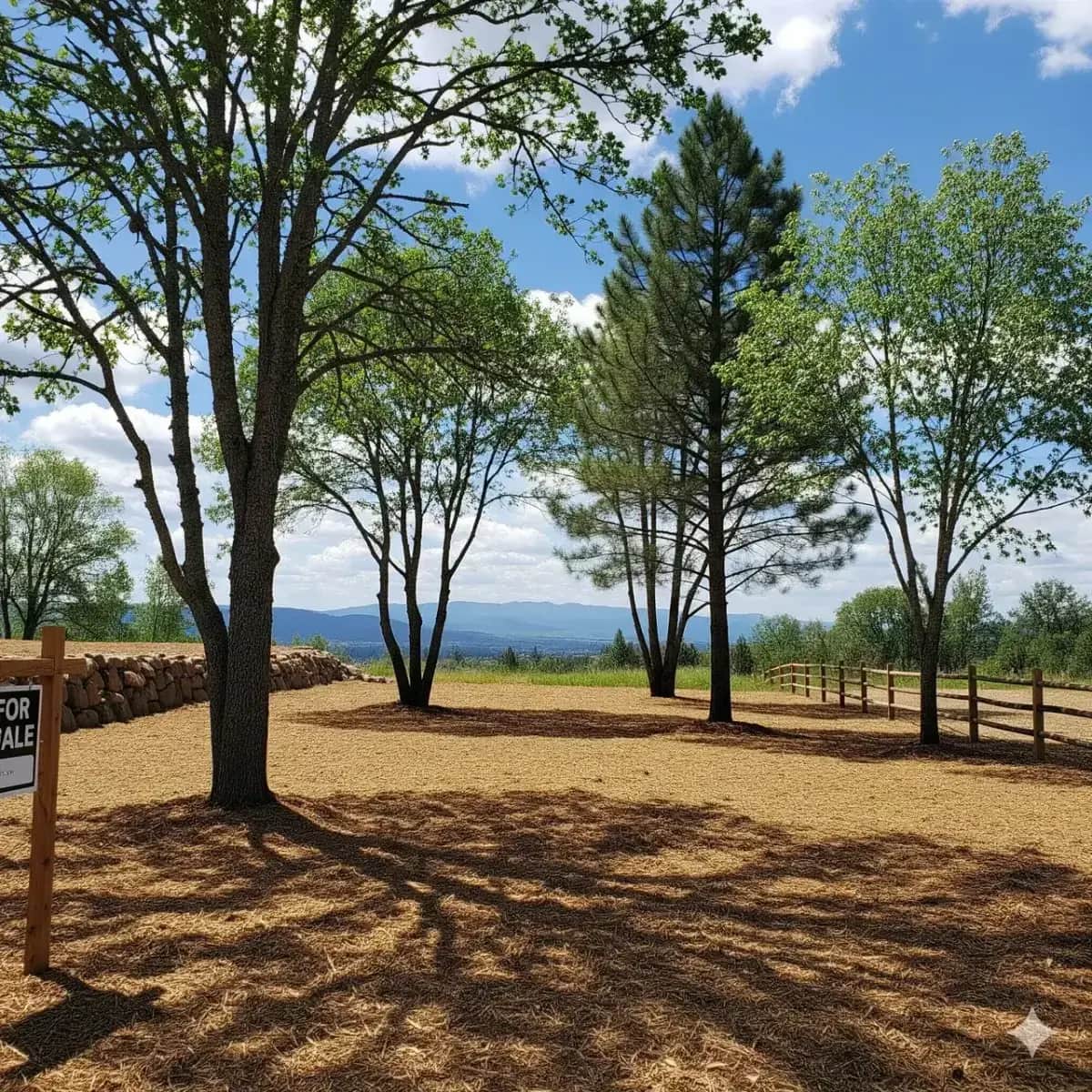
Preparing land for construction, resale positioning, agricultural shifts or improved recreational use requires more than indiscriminate cutting. Our lot clearing process balances visibility enhancement, wildfire fuel reduction, retention of desirable species and minimized soil disturbance. We deliver a clean, marketable finish while preserving the site's long-term ecological function.
Projects range from single residential lots reclaiming years of unchecked regrowth to multi-acre rural tracts needing access corridors, view improvements, pasture edge clean-up or pre-construction staging. We scale equipment and sequencing to avoid compaction and unnecessary ground disturbance.
Spokane County and surrounding communities continue to see residential development pushing into forested WUI areas. Many new construction sites in Mead, Deer Park, Liberty Lake, and Green Bluff require professional lot clearing before foundation work can begin.
What's Included in Lot Clearing
Brush & Sapling Removal — All understory vegetation, small-diameter trees, invasive species, and accumulated growth are mechanically processed on-site. This eliminates the need for separate cutting, piling, and hauling stages.
Mulch Distribution — Shredded material is spread across the cleared area, creating a uniform ground cover that retains moisture, suppresses weed regrowth, and protects exposed soil from erosion.
Light Surface Blending — After mulching, the site receives a light finish pass to smooth uneven ground and create a clean, walkable surface. This is not structural grading — it produces a visually tidy lot ready for next-phase work.
Selective Tree Retention — Healthy, desirable trees are flagged and preserved during clearing. Selective retention maintains shade, wind protection, and property value while removing hazard trees and overgrowth.
Access & Staging Prep — Driveway corridors, equipment staging areas, and utility access paths are cleared and widened as needed so follow-on trades (grading, excavation, utilities) can mobilize without delay.
Typical Lot Clearing Timeline
- Assessment (Day 1) — On-site walkthrough to identify boundaries, retention trees, access points, and any permitting considerations.
- Equipment Mobilization — Mulching equipment is transported and positioned based on the site plan. Staging is coordinated to minimize impact on adjacent properties.
- Clearing (1–4 days per lot) — Active mulching and vegetation removal. Duration depends on lot size, vegetation density, slope, and retention requirements.
- Finish & Walkthrough — Surface blending, debris check, and a final walkthrough with the property owner to confirm scope completion and discuss next steps.
Key Benefits
- Accelerates build readiness & permits follow-on trades
- Improves visibility, usability & access flow
- Reduces wildfire hazard & unmanaged fuel continuity
- Preserves topsoil structure vs full-scrape methods
- Enhances perceived property value & marketability
Ideal Use Cases
- New construction site preparation
- Pre-listing property enhancement for real estate
- Pasture & fence line reclaim
- Trail & utility access restoration
- Wildfire hazard & ladder fuel reduction
Our Process
- Detailed site walk: constraints, high-value trees, objectives
- Selective brush & sapling reduction / hazard removal
- Mulch distribution & finish smoothing
- View & access refinement (as scoped)
- Final walkthrough & next steps (grading, utilities, etc.)
Environmental Considerations
We avoid unnecessary soil scraping, preserve root structures to reduce erosion, and maintain buffer spacing for desirable shade or wind protection. Mulched biomass recycles nutrients while reducing haul-away carbon impact.
Related Services
Lot clearing frequently transitions into forestry mulching for broader acreage fuel reduction or defensible space implementation near new structures. Washington landowners may qualify for DNR cost-share reimbursement on eligible clearing work—use our calculator to estimate savings. Learn more about wildfire risks in our guide to hidden wildfire threats and the DNR cost-share guide.
Frequently Asked Questions
What is included in lot clearing?+
Lot clearing includes selective removal of brush, saplings, accumulated understory, and nuisance growth, followed by mulch distribution and light surface smoothing. The mulched material stays on-site as ground cover, eliminating hauling costs. Large merchantable timber removal, full excavation, and utilities prep are separate scopes that can be coordinated alongside clearing.
Do you remove stumps?+
Standard forestry mulching cuts vegetation to near ground level but does not grind stumps below the soil surface. This preserves root structures that stabilize the soil and reduce erosion. Below-grade stump grinding or extraction can be scheduled as a separate service when needed for foundation work, hardscape installation, or aesthetic reasons.
What about hauling?+
Because vegetation is mechanically shredded and distributed on-site, hauling is rarely required — saving disposal fees, fuel costs, and truck traffic on your property. The mulch layer retains moisture and returns nutrients to the soil as it decomposes. If any oversized debris or non-vegetative material needs removal, it can be consolidated and hauled by request.
Is grading included?+
We perform light surface blending after mulching to produce a clean, uniform finish suitable for walking and visual inspection. This is not structural grading — cut/fill balancing, drainage shaping, and engineered subgrade work require a separate grading contractor. Many clients use our cleared lot as the starting point for a grading scope immediately afterward.
How long does it take?+
Smaller residential lots with moderate vegetation can often be cleared in a single day. Larger multi-acre tracts or heavily overgrown sites typically take 2–4 days depending on vegetation density, terrain, slope, and access conditions. An on-site assessment lets us walk the property and provide a realistic timeline before mobilizing equipment.
Need Lot Clearing?
Start with a free on-site assessment and professional vegetation management plan.