Liberty Lake, Washington
Forestry Mulching in Liberty Lake, WA
Liberty Lake hillside neighborhoods need careful, slope-aware fuel reduction. Forestry mulching improves spacing and access without heavy soil disturbance.
Forestry Mulching in Liberty Lake, Washington
Gow Forestry provides professional forestry mulching services in Liberty Lake, Washington. The city straddles two distinct terrain zones: east of Liberty Lake Road lies the flat Spokane Valley floor at 2,000–2,150 feet, while south and west of the lake the terrain climbs to 2,600 feet on Carlson Hill, with Kramer Hill exceeding 2,700 feet. This mixed topography creates distinct wildland-urban interface zones on both the flats and the slopes, and the city restricts open burning and recreational fires within its limits as of July 2024.
Liberty Lake Terrain & Wildfire Risk
Liberty Lake's terrain divides sharply between the flat valley floor to the east and the steep topographical relief to the south and west. Carlson Hill rises to 2,600 feet and Kramer Hill exceeds 2,700 feet, creating slopes that carry fire uphill rapidly toward ridge-top properties. The transition from flat residential development to steep, forested hillsides happens over a short distance, which means many neighborhoods face wildfire exposure from adjacent slopes.
The city of Liberty Lake has taken proactive steps on wildfire risk. Open burning and recreational fires have been restricted within city limits since July 2, 2024, and fire-resistant materials and ignition-resistant construction are required in designated WUI zones. These regulations reflect the real risk that Liberty Lake's mixed terrain creates — particularly on hillside properties where slope, vegetation, and wind alignment can drive rapid fire behavior.
The September 2024 Rocky Park Fire, though contained at 0.1 acres, demonstrated how quickly ignition can occur near developed areas. Even small fires on the slopes above Liberty Lake can threaten structures when wind pushes flames uphill through unmanaged brush and conifer understory. Proactive fuel reduction on both the valley-floor lots and the hillside properties is the most effective defense. Learn more about fire risk factors in our guide to wildfire threats beyond the brush line.
Common Forestry Mulching Projects in Liberty Lake
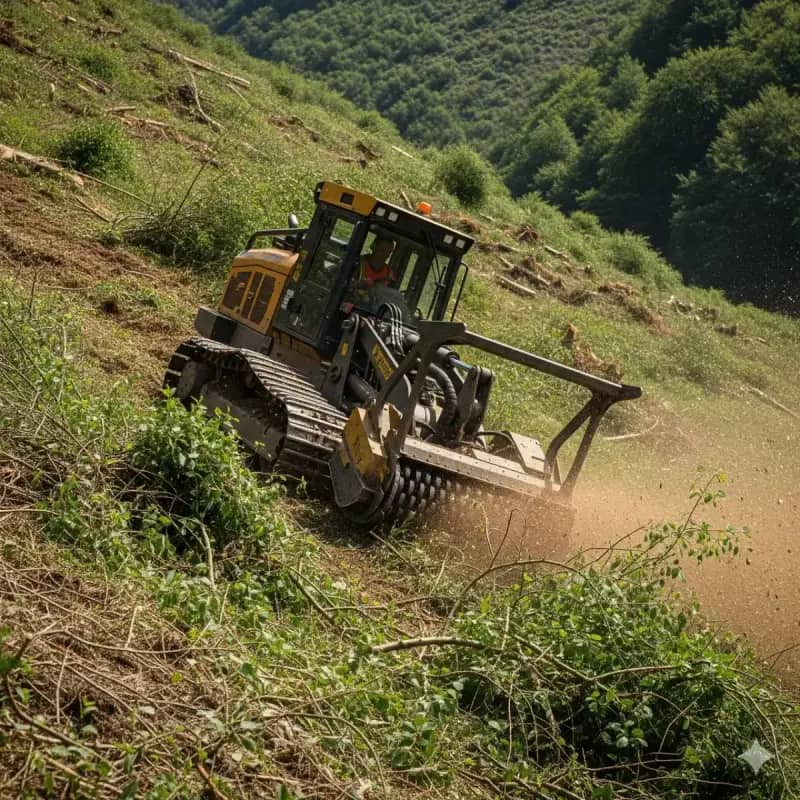
- Hillside fuel reduction — Clearing brush and ladder fuels on the steep slopes of Carlson Hill and Kramer Hill where uphill fire behavior poses the greatest risk to ridge-top properties.
- WUI zone defensible space — Creating Zone 0–2 compliant defensible space buffers on properties in designated WUI zones where ignition-resistant construction standards apply.
- Valley-floor lot clearing — Managing fuel buildup on flat residential lots east of Liberty Lake Road where grassland and brush connect to adjacent properties.
- Lakeside vegetation management — Reducing overgrown brush and conifer understory on properties adjacent to Liberty Lake without disturbing shoreline soils.
- New construction site prep — Clearing wooded hillside and valley lots for residential builds in Liberty Lake's developing areas while preserving topsoil and mature trees.
- Property boundary fuel breaks — Establishing cleared buffers along fence lines where maintained yards meet unmanaged hillside or grassland vegetation.
Why Liberty Lake Property Owners Choose Mulching Over Traditional Clearing
Liberty Lake's city-wide ban on open burning and recreational fires, effective since July 2024, eliminates pile burning as a vegetation management option. Hauling brush from hillside properties is expensive and logistically difficult when slopes exceed 20–30%, which is common on the terrain rising toward Carlson and Kramer Hills. Traditional scraping or grubbing on these slopes would expose soils to erosion and destabilize hillside root systems.
Forestry mulching is the most practical method for Liberty Lake's mixed terrain. The machine processes standing brush and small trees in a single pass on both flat valley lots and steep hillsides. The mulch layer stays on-site, protecting slopes from erosion and suppressing regrowth without the soil disturbance that comes with alternative methods. For hillside properties where construction standards already require fire-resistant materials, mulching completes the defensible space component of a WUI-compliant property.
DNR Cost-Share Eligibility in Spokane County
Liberty Lake property owners in Spokane County may qualify for up to 50% reimbursement on eligible forest health treatments through the Washington Department of Natural Resources cost-share program. The DNR Northeast Region administers applications for this area, and eligible treatments include non-commercial thinning, forestry mulching, slash disposal, and defensible space creation.
Use our DNR cost-share calculator to estimate your potential reimbursement, or contact the DNR Northeast Region directly at ne_loa@dnr.wa.gov for program details. Kevin Gow assists landowners with the full application process from eligibility review through final reimbursement.
Explore Our Services
Learn more about our wildfire mitigation and land management services across the Inland Northwest.
Liberty Lake Forestry Mulching FAQ
Do you work on hillside properties in Liberty Lake?+
Yes. We work on both the flat valley-floor lots east of Liberty Lake Road and the steep hillside properties climbing toward Carlson Hill and Kramer Hill. We plan machine routing for slope conditions and access constraints on each project.
Is burning allowed for vegetation removal in Liberty Lake?+
No. Liberty Lake has restricted open burning and recreational fires within city limits since July 2, 2024. Forestry mulching is an effective alternative that processes vegetation in place without fire, smoke, or permit requirements.
What is the wildfire risk in Liberty Lake?+
Liberty Lake faces wildfire risk from two directions: fire can spread across grassland on the valley floor and travel uphill through dense brush and conifer on the slopes south and west of the lake. The September 2024 Rocky Park Fire showed how quickly ignition can occur near developed areas even in a minor incident.
Does Liberty Lake require fire-resistant construction?+
Yes. Fire-resistant materials and ignition-resistant construction are required in designated WUI zones within Liberty Lake. Forestry mulching completes the defensible space component of WUI-compliant property management by reducing ladder fuels and brush around structures.
Does Liberty Lake qualify for DNR cost-share reimbursement?+
Yes. Liberty Lake properties in Spokane County are eligible for the DNR Northeast Region cost-share program, which reimburses up to 50% of eligible forest health treatments including forestry mulching, thinning, and defensible space creation.
How does Liberty Lake's mixed terrain affect mulching projects?+
Liberty Lake's terrain ranges from flat valley floor at 2,000 feet to steep hillsides exceeding 2,700 feet on Kramer Hill. This means some projects require both flat-ground efficiency and slope navigation within the same property. We plan routing to handle both terrain types in a single mobilization.
Nearby Service Areas
We also provide forestry mulching and wildfire mitigation services in these nearby communities:
Schedule Liberty Lake Mulching
Call now for a site visit and a clean, defensible finish on your Liberty Lake property.
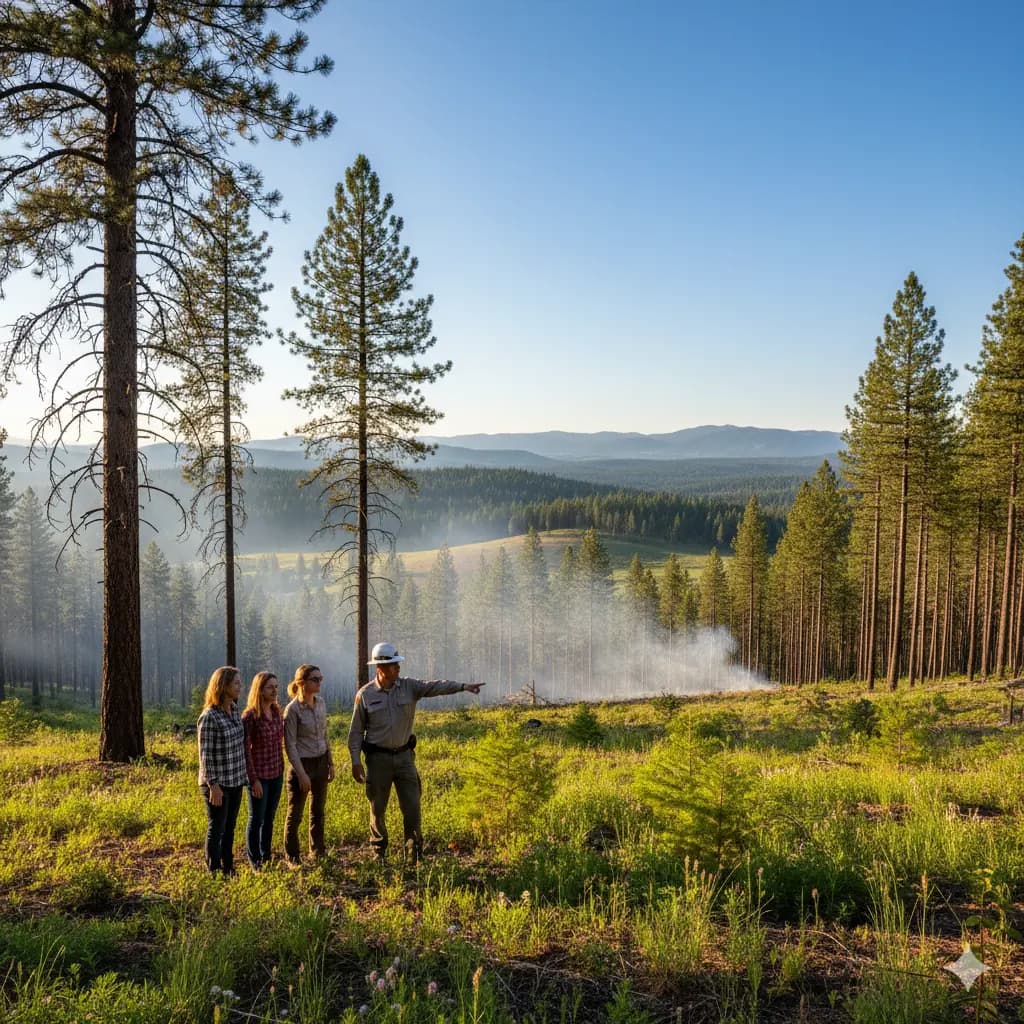
WA DNR Cost-Share: The Complete Landowner Guide
Everything you need to know about Washington's DNR cost-share program—eligibility, covered activities, application steps, and how to maximize your reimbursement for wildfire mitigation work.
50%
Funding Up To
12+
Eligible Activities
Free
Application Help