Mead, Washington
Forestry Mulching in Mead, WA
Mead properties often blend rural acreage with dense understory growth. Forestry mulching creates defensible spacing, opens access, and keeps projects moving without burn piles.
Forestry Mulching in Mead, Washington
Gow Forestry provides professional forestry mulching services in Mead, Washington. This unincorporated community of roughly 7,500 residents sits at about 1,906 feet of elevation just north of Spokane, occupying a transition zone where the valley floor gives way to rolling foothills. Deadman Creek divides the older and newer sections of the community, and the Little Spokane River runs through the area near Waikiki Springs Trail. Mead's mix of suburban development and adjacent forestland creates wildland-urban interface conditions that demand proactive fuel management.
Mead Terrain & Wildfire Risk
Mead is bounded by US-395 to the west and the railroad corridor to the east, with Deadman Creek cutting through the center of the community. The terrain transitions from the relatively flat Spokane Valley floor into rolling foothills that climb north toward Chattaroy and Elk. This topographic shift brings denser conifer coverage and heavier understory fuels as elevation increases.
Spokane County Fire District #4 serves the Mead area, covering 330 square miles of mixed suburban and rural territory. SCFD #4 is one of the larger districts in the county, and response times to properties on the community's outer edges can be longer than in denser neighborhoods. This makes defensible space and fuel reduction especially important for homeowners on larger lots where fire crews may not arrive before a fire reaches structures.
Mead serves as the lead agency for WRIA 55/57, the Little and Middle Spokane River watershed, reflecting the area's position along critical riparian corridors. Vegetation along these waterways includes dense deciduous and conifer growth that can carry fire between properties if not managed. The combination of watershed vegetation, rolling terrain, and expanding residential development creates the fuel continuity that mulching is designed to interrupt. Learn more about fire risk factors in our guide to wildfire threats beyond the brush line.
Common Forestry Mulching Projects in Mead
- Foothill transition zone clearing — Reducing dense understory where Mead's flat valley lots meet the rolling foothills with heavier conifer coverage to the north.
- Riparian buffer management — Managing overgrown vegetation along Deadman Creek and the Little Spokane River corridor without disturbing streamside soils.
- Large-lot fuel reduction — Clearing brush on multi-acre properties at the community's edges where SCFD #4 response times are longest.
- Defensible space zone creation — Building Zone 0–2 compliant buffers around homes in neighborhoods adjacent to forested land.
- Driveway and access clearing — Widening overgrown driveways and access roads on rural-edge properties to allow fire apparatus passage.
- New construction site prep — Clearing wooded parcels for residential builds in Mead's expanding development areas while preserving topsoil.
Why Mead Property Owners Choose Mulching Over Traditional Clearing
Mead's position between suburban Spokane and the rural foothills means many properties have mixed fuel types — grass, brush, and conifer understory — that are difficult to handle with a single traditional method. Pile burning is restricted during Spokane County's seasonal burn bans, and hauling brush from larger lots adds significant cost when vegetation is spread across several acres.
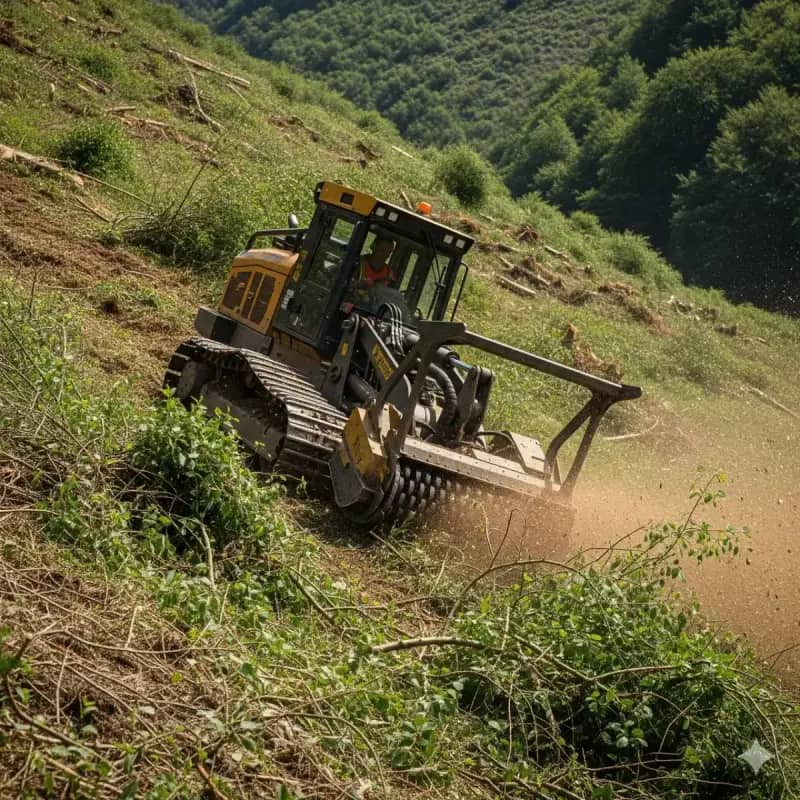
Forestry mulching handles all these fuel types in one pass. The machine grinds standing brush, saplings, and small trees into a uniform mulch layer that stays on-site, protecting the soil along Mead's creek corridors and hillside lots. For properties near Deadman Creek or the Little Spokane River, mulching avoids the soil disturbance that comes with grubbing or scraping, keeping riparian buffers intact while still reducing fire risk.
DNR Cost-Share Eligibility in Spokane County
Mead property owners in Spokane County may qualify for up to 50% reimbursement on eligible forest health treatments through the Washington Department of Natural Resources cost-share program. The DNR Northeast Region administers applications for this area, and eligible treatments include non-commercial thinning, forestry mulching, slash disposal, and defensible space creation.
Use our DNR cost-share calculator to estimate your potential reimbursement, or contact the DNR Northeast Region directly at ne_loa@dnr.wa.gov for program details. Kevin Gow assists landowners with the full application process from eligibility review through final reimbursement.
Explore Our Services
Learn more about our wildfire mitigation and land management services across the Inland Northwest.
Mead Forestry Mulching FAQ
Do you work on properties in the Mead area?+
Yes. Gow Forestry regularly works in the Mead area, including properties along the foothills, near Deadman Creek, and along the Little Spokane River corridor. We handle everything from small residential lots to multi-acre parcels.
Is burning allowed for brush removal in Mead?+
Spokane County enforces seasonal burn bans during dry summer months, which restricts pile burning for most of the active clearing season. Mulching eliminates the need for burn permits entirely by processing vegetation in place.
How does Mead's terrain affect mulching work?+
Mead sits in a transition zone between the flat valley floor and the rolling foothills to the north. The relatively gentle grades make most properties accessible for mulching equipment, though we plan routing carefully on hillside lots and near creek corridors.
What fire district covers Mead?+
Spokane County Fire District #4 covers Mead, spanning 330 square miles of mixed suburban and rural territory. Response times on the community's outer edges can be longer, making defensible space and fuel reduction especially important for those properties.
Does Mead qualify for DNR cost-share reimbursement?+
Yes. Mead properties in Spokane County are eligible for the DNR Northeast Region cost-share program, which reimburses up to 50% of eligible forest health treatments including forestry mulching, thinning, and defensible space creation.
Can you mulch near streams and wetlands in the Mead area?+
Yes. Forestry mulching is well-suited for work near riparian areas like Deadman Creek and the Little Spokane River because it processes vegetation without disturbing the soil. The mulch layer protects streamside soils from erosion while reducing fire risk.
Nearby Service Areas
We also provide forestry mulching and wildfire mitigation services in these nearby communities:
Schedule Mead Mulching
Call now for a site visit and a clean, defensible finish on your Mead property.
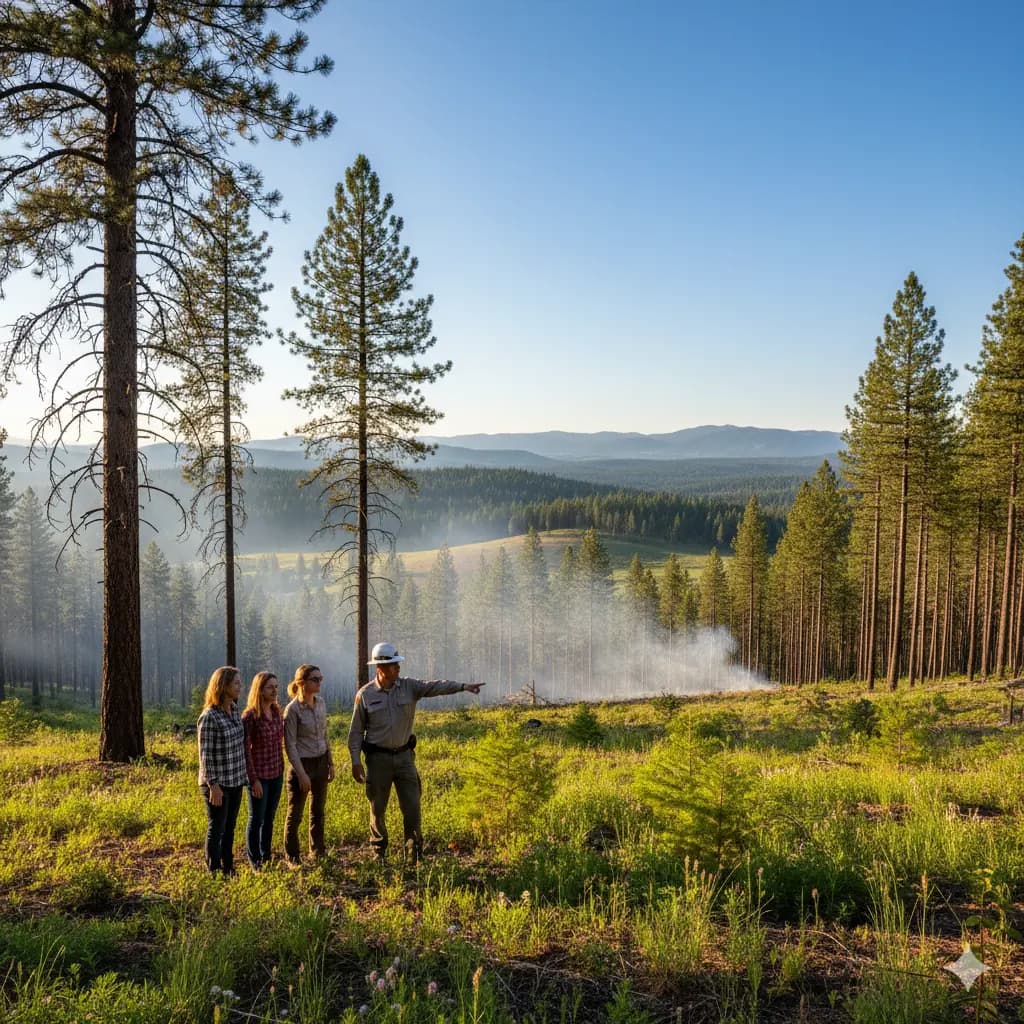
WA DNR Cost-Share: The Complete Landowner Guide
Everything you need to know about Washington's DNR cost-share program—eligibility, covered activities, application steps, and how to maximize your reimbursement for wildfire mitigation work.
50%
Funding Up To
12+
Eligible Activities
Free
Application Help