
Coeur d'Alene, Idaho
Forestry Mulching in Coeur d'Alene, ID
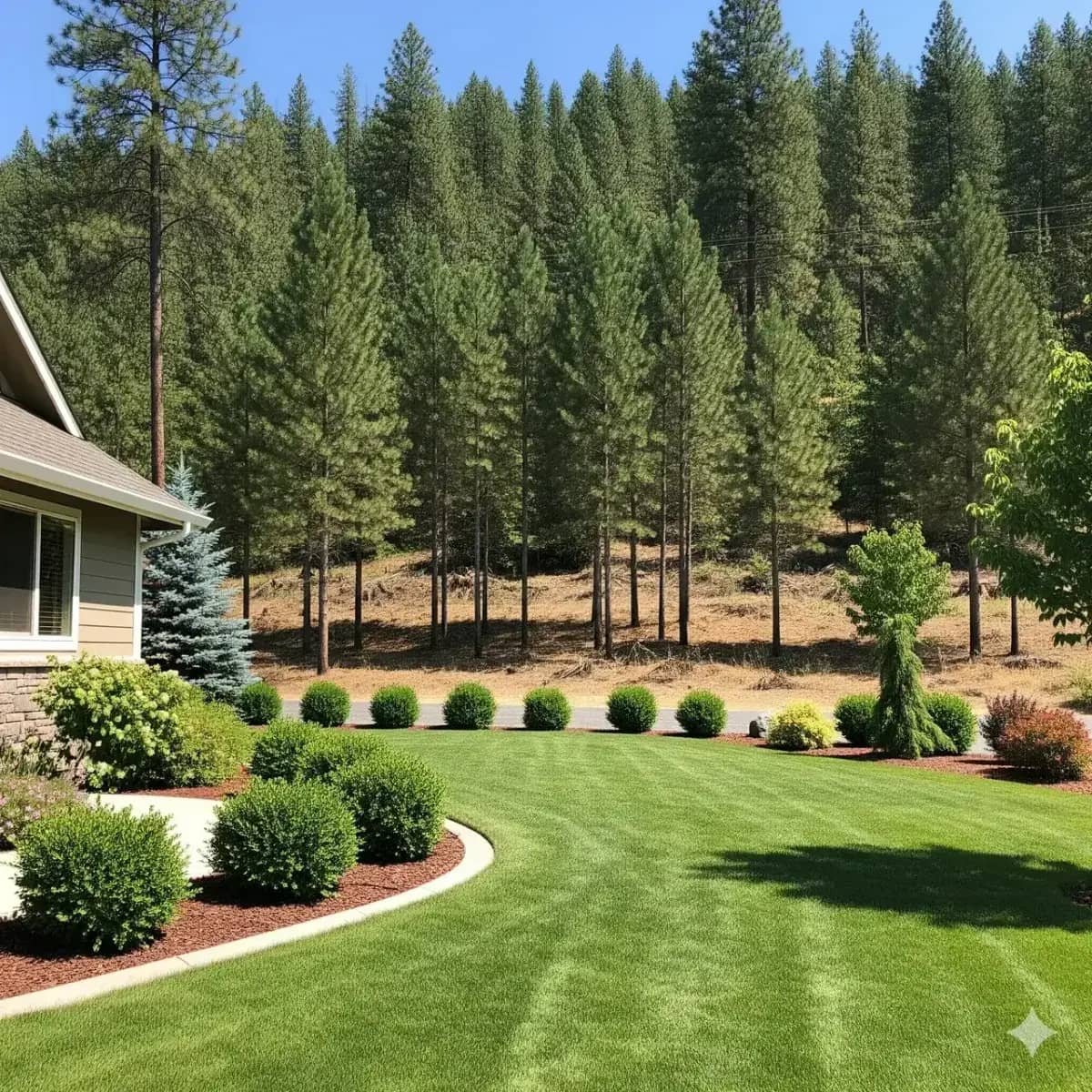
Lakeside lots and forested neighborhoods need fast ladder fuel reduction and cleaner access. Mulching delivers a uniform finish without hauling or burn piles.
Forestry Mulching in Coeur d'Alene, Idaho
Gow Forestry provides professional forestry mulching services in Coeur d'Alene, Idaho. The city sits within the Idaho Panhandle National Forests, a 2.5-million-acre system that includes the Selkirk, Cabinet, Purcell, Coeur d'Alene, and Bitterroot mountain ranges. Elevations range from 2,100 feet near the lake to 7,600 feet on surrounding peaks, with steep slopes often exceeding 60–80% grade. In 2015, a single lightning storm ignited 56 named wildfires within days, demonstrating the fire risk this landscape carries every dry season.
Coeur d'Alene Terrain & Wildfire Risk
Coeur d'Alene's setting within the Idaho Panhandle National Forests means properties here are surrounded by some of the most fire-prone terrain in the Northwest. The Selkirk, Cabinet, Purcell, Coeur d'Alene, and Bitterroot mountain ranges create a landscape of steep, inaccessible slopes with grades often reaching 60–80%. Dead and downed trees accumulate on these slopes where terrain makes removal difficult, building fuel loads that feed intense fires when ignition occurs.
The region's fire history is among the most dramatic in the country. The 1910 Great Fire — the driest year in memory at the time — required 9,000 firefighters and burned millions of acres across the Idaho Panhandle and western Montana. More recently, a 2015 lightning storm ignited 56 named wildfires within days, overwhelming initial attack resources and demonstrating that large-scale fire events remain a present-day reality, not just history.
Large lakes — Coeur d'Alene Lake, Pend Oreille, and Priest lakes — shape the local climate with higher precipitation at upper elevations reaching up to 80 inches per year. This moisture supports dense vegetation growth, but during dry summers the same heavy fuel loads become extreme fire hazards. The Tubbs Hill fuel mitigation project, funded by a $240,000 grant from the City and Idaho Department of Lands, demonstrates the scale of investment needed to manage fire risk even in high-profile urban-adjacent areas. Learn more about fire risk factors in our guide to wildfire threats beyond the brush line.
Common Forestry Mulching Projects in Coeur d'Alene
- Steep hillside fuel reduction — Clearing dense understory and ladder fuels on the 60–80% grade slopes surrounding Coeur d'Alene where fire behavior is most extreme.
- Lakeside property clearing — Reducing fuel loads on lots adjacent to Coeur d'Alene Lake where dense forest transitions abruptly to residential development.
- WUI neighborhood defensible space — Creating Zone 0–2 compliant defensible space buffers in neighborhoods at the forest edge, following the same approach used in the Tubbs Hill fuel mitigation project.
- Dead and downed tree removal — Clearing accumulated deadfall on steep slopes where traditional removal is impractical due to terrain access constraints.
- New construction site prep — Clearing wooded lots for residential builds on Coeur d'Alene's hillside and lakeside properties while preserving topsoil and mature trees.
- Access road and fire break creation — Opening corridors through forested sections to improve both property access and fire crew response routes in mountainous areas.
Why Coeur d'Alene Property Owners Choose Mulching Over Traditional Clearing
Coeur d'Alene's steep slopes and dense forest make traditional clearing methods either impossible or prohibitively expensive. Slopes at 60–80% grade cannot be safely scraped or grubbed, and hauling brush from mountainous properties requires expensive equipment and road access that many lots lack. Idaho requires burn permits from May 10 through October 20, and pile burning on steep, forested terrain creates exactly the fire risk that fuel reduction is meant to eliminate.
Forestry mulching works directly on the steep terrain that defines Coeur d'Alene's landscape. The machine grinds dense understory, dead and downed material, and small-diameter trees into a protective mulch layer in a single pass — no haul-off, no burn piles, no exposed soil on fragile slopes. For property owners investing in wildfire mitigation, mulching delivers the most fuel reduction per dollar spent and preserves the mature trees and root systems that stabilize Coeur d'Alene's steep mountain soils.
Idaho Department of Lands Programs
Coeur d'Alene property owners in Kootenai County can work with the Idaho Department of Lands (IDL) on forest management and wildfire preparedness. IDL's involvement in projects like the $240,000 Tubbs Hill fuel mitigation grant demonstrates their active role in supporting community-level fire risk reduction. Burn permits are required in Idaho from May 10 through October 20 and are available free online at burnpermits.idaho.gov.
The IDL Coeur d'Alene Staff Office is located at 3284 W Industrial Loop and can be reached at (208) 769-1525 for questions about forest management programs and fire preparedness resources. For comparison with Washington's DNR cost-share reimbursement program, visit our DNR cost-share page.
Explore Our Services
Learn more about our wildfire mitigation and land management services across the Inland Northwest.
Coeur d'Alene Forestry Mulching FAQ
Do you work on steep hillside properties in Coeur d'Alene?+
Yes. Coeur d'Alene's terrain includes slopes exceeding 60–80% grade. We plan machine routing for steep terrain and handle the dense understory, dead and downed material, and ladder fuels that make these slopes so fire-prone.
How serious is the wildfire risk in Coeur d'Alene?+
Coeur d'Alene sits within the 2.5-million-acre Idaho Panhandle National Forests. In 2015, a single lightning storm ignited 56 named wildfires within days. The 1910 Great Fire required 9,000 firefighters and burned millions of acres across the same region. Fire risk here is among the highest in the Northwest.
Are burn permits required in Idaho?+
Yes. Idaho requires burn permits from May 10 through October 20. Permits are free and available online at burnpermits.idaho.gov. Forestry mulching eliminates the need for burning entirely by processing vegetation in place without fire risk.
What is the Tubbs Hill fuel mitigation project?+
Tubbs Hill is a high-profile fuel mitigation project in Coeur d'Alene funded by a $240,000 grant from the City and Idaho Department of Lands. It demonstrates the scale of investment needed to manage fire risk in urban-adjacent forested areas — the same approach we apply at the individual property level.
Can mulching handle dead and downed trees on steep slopes?+
Yes. Accumulated deadfall on Coeur d'Alene's steep slopes is a major fire hazard that traditional removal methods struggle to address. Forestry mulching processes dead and downed material in place, reducing fuel loads without the hauling logistics that make steep-slope cleanup so expensive.
How do I contact Idaho Department of Lands about forest management?+
The IDL Coeur d'Alene Staff Office is located at 3284 W Industrial Loop and can be reached at (208) 769-1525. They can provide information about forest management programs, fire preparedness resources, and burn permit requirements.
Nearby Service Areas
We also provide forestry mulching and wildfire mitigation services in these nearby communities:
Schedule Coeur d'Alene Mulching
Call now for a site visit and a clean, defensible finish on your Coeur d'Alene property.