Deer Park, Washington
Forestry Mulching in Deer Park, WA
Deer Park acreage often includes dense sapling growth and mixed fuels. Forestry mulching creates spacing, improves access, and builds defensible space quickly.
Forestry Mulching in Deer Park, Washington
Gow Forestry provides professional forestry mulching services in Deer Park, Washington. Sitting at 2,123 feet of elevation in the southeastern foothills of the Okanogan Highlands, Deer Park is surrounded by gently rolling prairies — Wild Rose Prairie and Half Moon Prairie — that transition into densely forested hills and valleys. The town's park-like woodland landscape, named for the abundant deer herds that once roamed the area, now carries heavy fuel loads in the forested blocks along its northern and eastern boundaries where wildfire risk is highest.
Deer Park Terrain & Wildfire Risk
Deer Park's terrain is a transition landscape. The town center sits on gently rolling prairie, while the surrounding hills rise into densely forested blocks of ponderosa pine, Douglas fir, and mixed brush. Wild Rose Prairie and Half Moon Prairie provide open space south and west of town, but the northern and eastern boundaries climb into heavier timber where decades of fire suppression have created overstocked stands with continuous ladder fuels.
The highest wildfire risk concentrates in the wildland-urban interface areas where residential development meets these forested blocks. Heavy fuel loads on the northern and western boundaries create conditions where fire can build intensity in the timber and spread into developed areas. The Okanogan Highlands topography funnels wind through the valley corridors, which can accelerate fire spread during dry summer months.
Deer Park has a historical connection to wildfire: the Great Spokane Fire of 1889 drove development to the area, and the Standard Lumber Company built a sawmill here specifically for reconstruction timber. The same forested landscape that supplied that lumber now requires active management to prevent the fuel buildup that makes modern wildfires so destructive. Learn more about fire risk factors in our guide to wildfire threats beyond the brush line.
Common Forestry Mulching Projects in Deer Park
- WUI boundary fuel reduction — Clearing heavy fuel loads in the forested blocks along Deer Park's northern and eastern boundaries where timber meets residential development.
- Prairie-to-forest transition management — Reducing brush buildup where Wild Rose Prairie and Half Moon Prairie grasslands meet denser conifer stands.
- Overstocked stand thinning — Restoring healthier tree spacing in dense ponderosa pine and Douglas fir blocks where fire suppression has packed trees too tightly.
- Defensible space zone creation — Building Zone 0–2 compliant buffers around homes at the forest edge where fire exposure is greatest.
- Access road and fire break clearing — Opening corridors through forested sections to improve both property access and fire crew response routes.
- New construction site prep — Clearing wooded lots for residential builds in Deer Park's growing development areas while preserving mature trees and topsoil.
Why Deer Park Property Owners Choose Mulching Over Traditional Clearing
Deer Park's forested blocks carry heavy fuel loads that require more than hand clearing to manage effectively. Pile burning is restricted during Spokane County's seasonal burn bans, and the volume of material in overstocked stands makes haul-off impractical on larger parcels. The transition terrain between prairies and forested hills means many properties have multiple fuel types that need different treatment approaches.
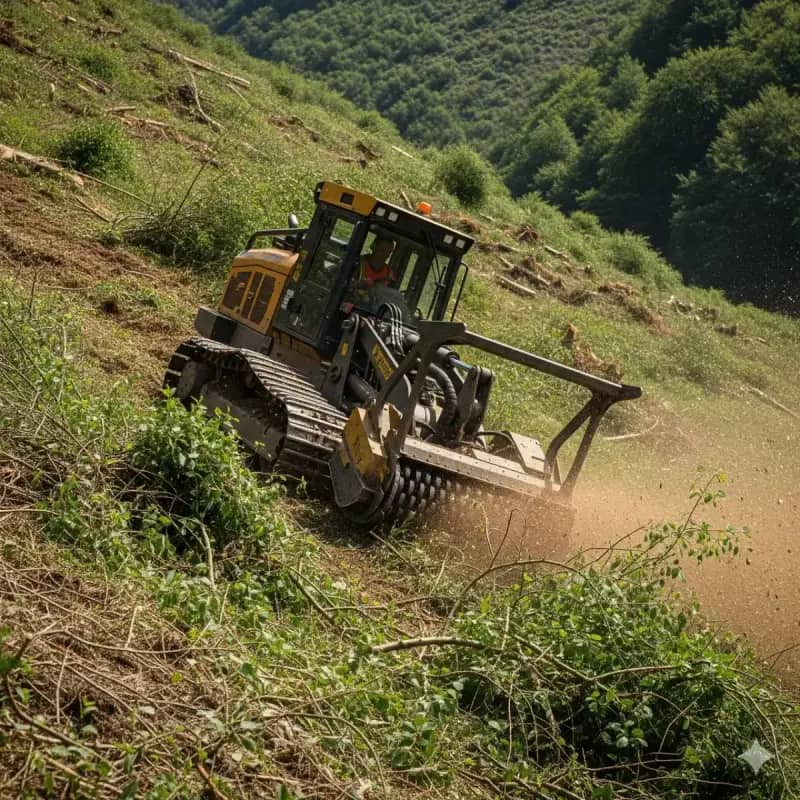
Forestry mulching handles all of Deer Park's fuel types in a single pass — grass, brush, small-diameter trees, and dense conifer understory. The machine works across the rolling terrain, following planned routing that preserves healthy mature trees while grinding fuel-contributing vegetation into a protective mulch layer. This approach is faster, cleaner, and more cost-effective than multi-step methods, and the mulch layer left behind suppresses regrowth and protects the prairie soils that are prone to wind erosion when exposed.
DNR Cost-Share Eligibility in Spokane County
Deer Park property owners in Spokane County may qualify for up to 50% reimbursement on eligible forest health treatments through the Washington Department of Natural Resources cost-share program. The DNR Northeast Region administers applications for this area, near the boundary of its service territory, and eligible treatments include non-commercial thinning, forestry mulching, slash disposal, and defensible space creation.
Use our DNR cost-share calculator to estimate your potential reimbursement, or contact the DNR Northeast Region directly at ne_loa@dnr.wa.gov for program details. Kevin Gow assists landowners with the full application process from eligibility review through final reimbursement.
Explore Our Services
Learn more about our wildfire mitigation and land management services across the Inland Northwest.
Deer Park Forestry Mulching FAQ
Do you work on forested properties around Deer Park?+
Yes. We regularly work on properties along Deer Park's northern and eastern boundaries where residential development meets heavily forested blocks. We handle everything from overstocked stand thinning to defensible space creation.
Is burning allowed for brush removal in Deer Park?+
Spokane County enforces seasonal burn bans during dry summer months that restrict pile burning during the peak clearing season. Forestry mulching eliminates the need for burn permits by processing all vegetation in place without smoke.
What makes Deer Park's wildfire risk unique?+
Deer Park sits at 2,123 feet in the Okanogan Highlands foothills where rolling prairies transition into densely forested hills. The heaviest fuel loads concentrate along the northern and eastern boundaries where decades of fire suppression have overstocked the timber, creating continuous ladder fuels right next to residential areas.
Can mulching handle the heavy timber around Deer Park?+
Forestry mulching handles small-diameter trees, dense understory, and brush in a single pass. For overstocked stands with larger timber, we selectively mulch the understory and ladder fuels while preserving healthy mature ponderosa pine and Douglas fir.
Does Deer Park qualify for DNR cost-share reimbursement?+
Yes. Deer Park properties in Spokane County are eligible for the DNR Northeast Region cost-share program, which reimburses up to 50% of eligible forest health treatments including forestry mulching, thinning, and defensible space creation.
How does the prairie-to-forest transition affect mulching projects in Deer Park?+
Many Deer Park properties span the transition from open grassland to dense forest, which means multiple fuel types in one project. Forestry mulching handles grass, brush, and conifer understory in one pass, making it the most efficient method for these mixed-terrain properties.
Nearby Service Areas
We also provide forestry mulching and wildfire mitigation services in these nearby communities:
Schedule Deer Park Mulching
Call now for a site visit and a clean, defensible finish on your Deer Park property.
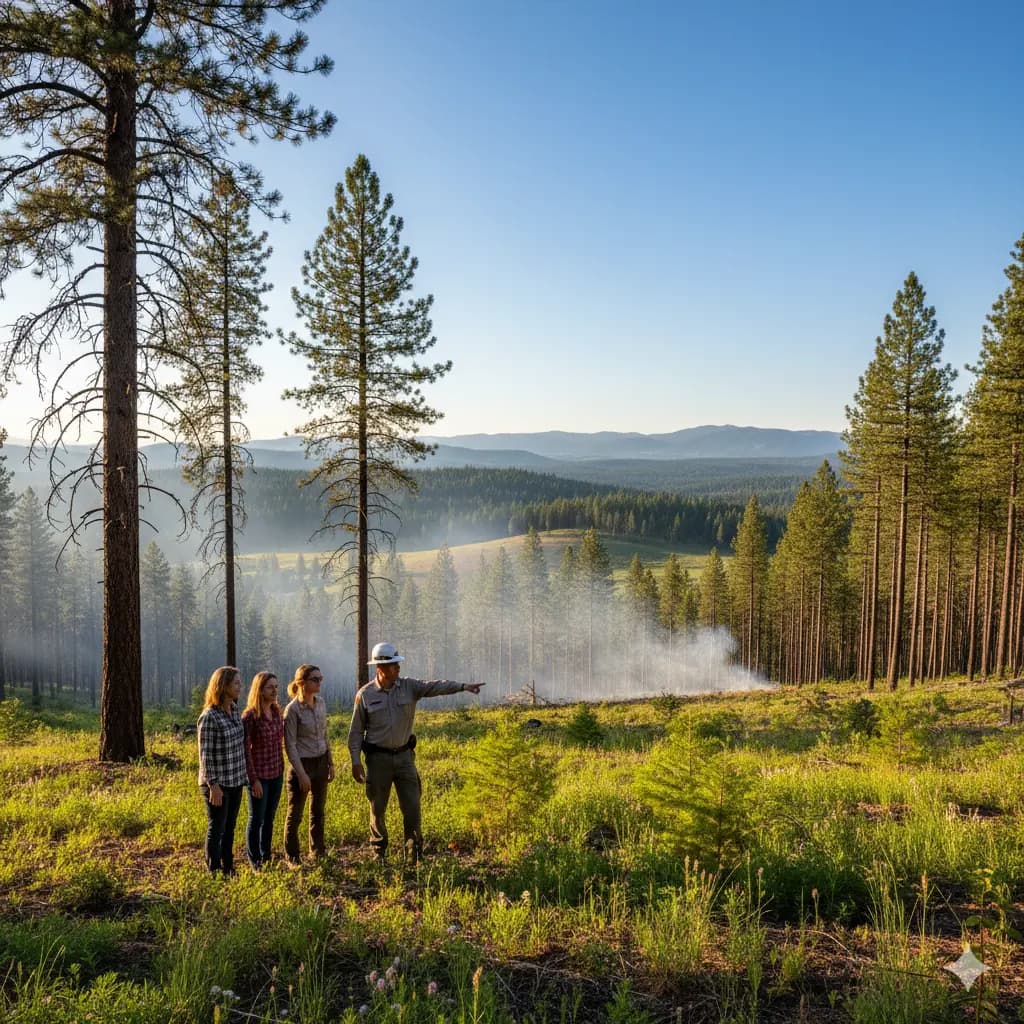
WA DNR Cost-Share: The Complete Landowner Guide
Everything you need to know about Washington's DNR cost-share program—eligibility, covered activities, application steps, and how to maximize your reimbursement for wildfire mitigation work.
50%
Funding Up To
12+
Eligible Activities
Free
Application Help