Elk, Washington
Forestry Mulching in Elk, WA
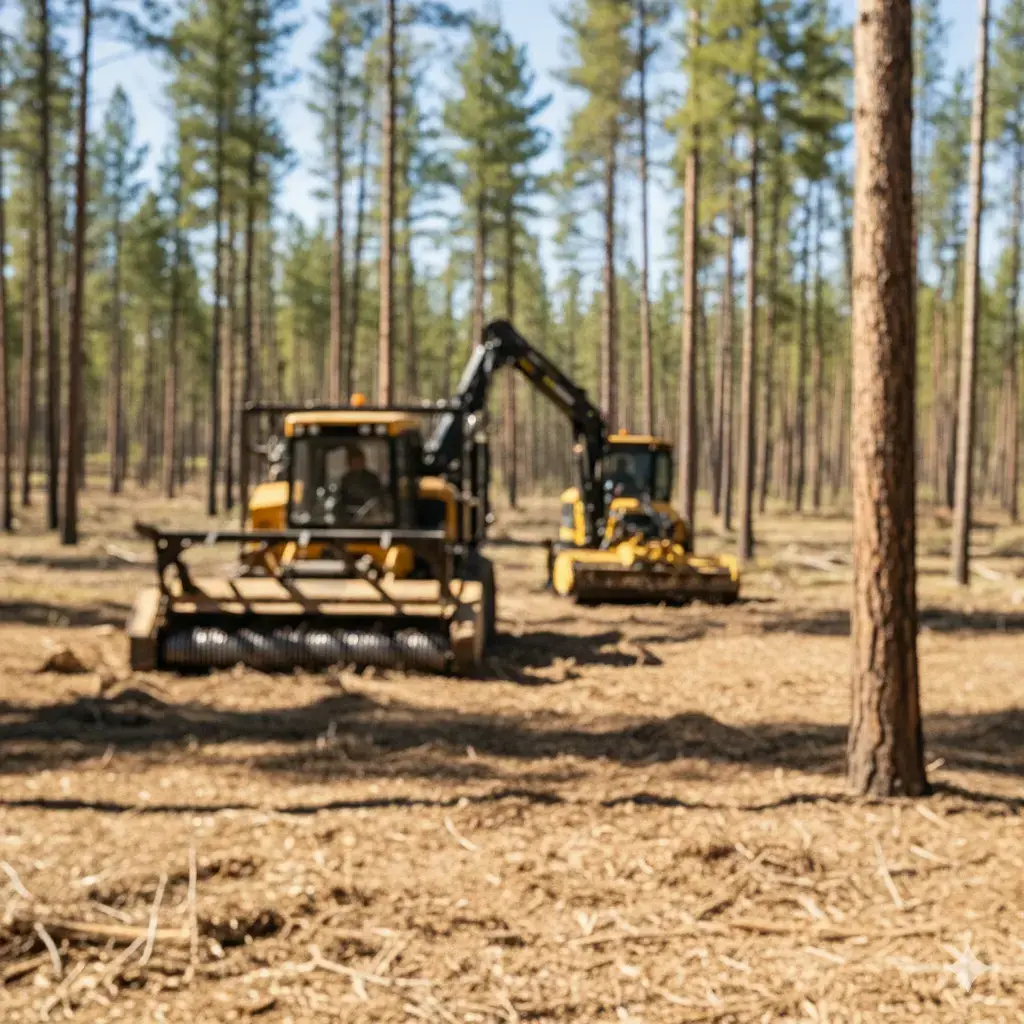
Elk-area parcels often include dense forested sections that need ladder fuel reduction and access improvements. Mulching creates a clean, defensible finish.
Forestry Mulching in Elk, Washington
Gow Forestry provides professional forestry mulching services in Elk, Washington. This unincorporated rural community in northern Spokane County sits in a valley nestled in the Selkirk Mountain foothills, with the Little Spokane River at roughly 1,840 feet and surrounding terrain rising rapidly to over 2,200 feet within a fifth of a mile. The August 2023 Oregon Road Fire burned more than 8,000 acres and destroyed 30 structures in the Elk area, with Level 3 evacuations ordered — a stark demonstration of wildfire risk in this heavily forested landscape.
Elk Terrain & Wildfire Risk
Elk occupies a narrow valley where the Little Spokane River flows through a mix of forests and farmland at the base of the Selkirk Mountain foothills. The terrain is dramatic — from the river bottom at 1,840 feet, the land rises over 360 feet within a fifth of a mile in some areas, creating steep slopes covered with dense conifer forest. The Selkirk Mountains rise within miles in all directions, and this topography funnels wind and fire through the valley corridors.
The August 2023 Oregon Road Fire proved what this landscape is capable of. The fire burned more than 8,000 acres, destroyed 30 structures, and triggered Level 3 (GO NOW) evacuations across the Elk community. The speed and intensity of the fire in the steep, timbered terrain overwhelmed initial suppression efforts and demonstrated how quickly fire can move through the Selkirk foothills when fuel loads are high and conditions are dry.
Spokane County Fire District #4, Station 43 at 40116 North Elk Camden Road serves the Elk area. Given the remote, forested character of the community, response times to properties on the valley's edges can be significant. Properties that maintained defensible space during the Oregon Road Fire had better outcomes, underscoring the value of proactive fuel reduction in this high-risk landscape. Learn more about fire risk factors in our guide to wildfire threats beyond the brush line.
Common Forestry Mulching Projects in Elk
- Post-fire fuel reduction — Clearing regrowth and remaining fuel loads on properties affected by the 2023 Oregon Road Fire to prevent future fire intensity in the same corridors.
- Steep slope ladder fuel removal — Reducing dense understory on the rapid-rise slopes above the Little Spokane River where fire climbs fastest through continuous ladder fuels.
- Defensible space around rural homes — Creating Zone 0–2 compliant buffers on properties in the valley and foothills where the Oregon Road Fire demonstrated the consequences of inadequate clearance.
- Evacuation route and access clearing — Widening driveways and access roads to ensure residents can evacuate and fire crews can reach properties during fire events in this remote community.
- Forest-to-farmland transition management — Clearing fuel buildup where Elk's mixed forest and farmland meet, reducing the fire pathways between land use types.
- Overstocked stand thinning — Restoring healthier tree spacing in dense conifer stands in the Selkirk foothills where decades of fire suppression have created dangerous fuel density.
Why Elk Property Owners Choose Mulching Over Traditional Clearing
After the Oregon Road Fire, many Elk property owners face the urgent need to reduce fuel loads before the next fire season. Traditional pile burning creates smoke and fire risk in an already fire-prone landscape, and Spokane County's seasonal burn bans restrict burning during the months when the work is most needed. Hauling brush from the steep terrain in the Selkirk foothills is impractical — the cost and logistics of trucking material out of narrow valley roads make it prohibitive for most properties.
Forestry mulching works directly on Elk's steep slopes and in dense timber, following planned routing that preserves healthy mature trees while grinding fuel-contributing vegetation into a protective mulch layer. The machine handles the terrain that makes traditional clearing difficult, and the mulch layer left behind protects the steep hillside soils from erosion — a critical concern on slopes where root systems and ground cover are all that hold the soil in place after a fire or clearing operation.
DNR Cost-Share Eligibility in Spokane County
Elk property owners in Spokane County may qualify for up to 50% reimbursement on eligible forest health treatments through the Washington Department of Natural Resources cost-share program. The DNR Northeast Region administers applications for this area, and eligible treatments include non-commercial thinning, forestry mulching, slash disposal, and defensible space creation. After the Oregon Road Fire, fuel reduction projects in the Elk area may receive particular consideration given the documented fire history.
Use our DNR cost-share calculator to estimate your potential reimbursement, or contact the DNR Northeast Region directly at ne_loa@dnr.wa.gov for program details. Kevin Gow assists landowners with the full application process from eligibility review through final reimbursement.
Explore Our Services
Learn more about our wildfire mitigation and land management services across the Inland Northwest.
Elk Forestry Mulching FAQ
Do you work on properties in the Elk area after the Oregon Road Fire?+
Yes. We work throughout the Elk area including properties directly affected by the August 2023 Oregon Road Fire. Post-fire fuel reduction helps prevent future fire intensity by managing regrowth and remaining fuel loads before the next fire season.
Can you mulch on the steep slopes around Elk?+
Yes. Elk's terrain rises over 360 feet within a fifth of a mile in some areas. We plan machine routing for these steep slopes to reduce ladder fuels where fire climbs fastest, while preserving healthy mature trees and stabilizing hillside soils.
What happened during the 2023 Oregon Road Fire?+
The August 2023 Oregon Road Fire burned more than 8,000 acres and destroyed 30 structures in the Elk area, triggering Level 3 evacuations. The fire spread rapidly through steep, timbered terrain with high fuel loads. Properties with maintained defensible space had better outcomes.
What fire district covers Elk?+
Spokane County Fire District #4, Station 43 at 40116 North Elk Camden Road serves the Elk area. Given the remote, forested character of the community, response times can be significant, making defensible space and proactive fuel management essential.
Does Elk qualify for DNR cost-share reimbursement?+
Yes. Elk properties in Spokane County are eligible for the DNR Northeast Region cost-share program, which reimburses up to 50% of eligible forest health treatments including forestry mulching, thinning, and defensible space creation.
Is burning allowed for brush removal in the Elk area?+
Spokane County enforces seasonal burn bans during dry months, and pile burning creates additional fire risk in Elk's heavily forested landscape. Forestry mulching eliminates burn permits, smoke, and fire risk by processing vegetation in place.
Nearby Service Areas
We also provide forestry mulching and wildfire mitigation services in these nearby communities:
Schedule Elk Mulching
Call now for a site visit and a clean, defensible finish on your Elk property.
WA DNR Cost-Share: The Complete Landowner Guide
Everything you need to know about Washington's DNR cost-share program—eligibility, covered activities, application steps, and how to maximize your reimbursement for wildfire mitigation work.
50%
Funding Up To
12+
Eligible Activities
Free
Application Help